Research & Data
Research Done Before Building this Education Framework
Data-driven insights and sentiment analysis that informed the Opsked education framework.
Analysis
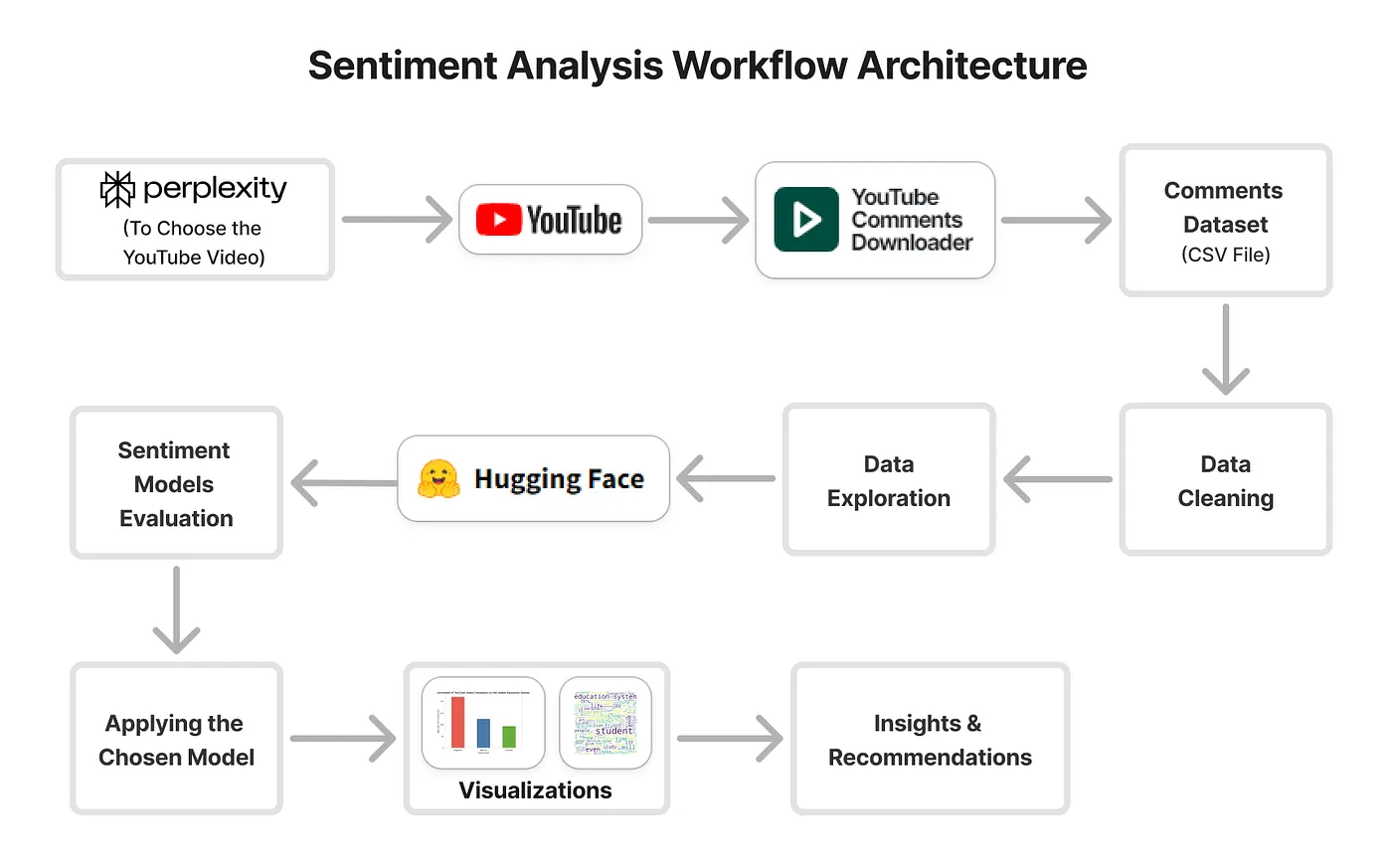
Sentiment Analysis of YouTube Video Comments on the Indian Education System
I conducted a sentiment analysis of the comments on the YouTube video — “The Dark Reality of Indian Education System” by the Tharun Speaks channel, which uncovered valuable opinions from the audience.
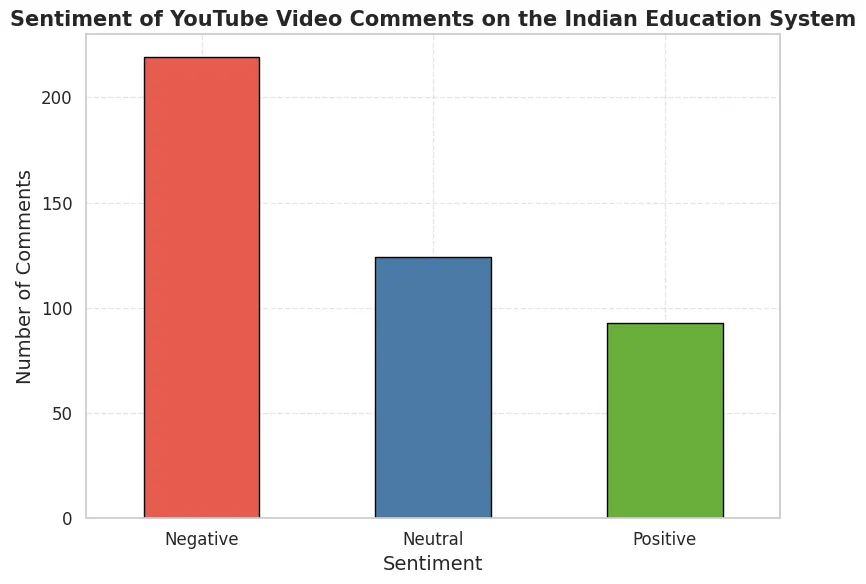
The results revealed a significant prevalence of negative sentiments, particularly concerning academic pressure and its impact on mental health. Many commenters expressed their frustrations about an exam-focused culture that seems to overshadow holistic development and well-being.
This analysis serves as a hypothesis testing for the Opsked — Open Skills Education framework, which aims to address these pressing concerns by prioritizing skills over rote learning.
Results
Sentiment Distribution & Pain Points
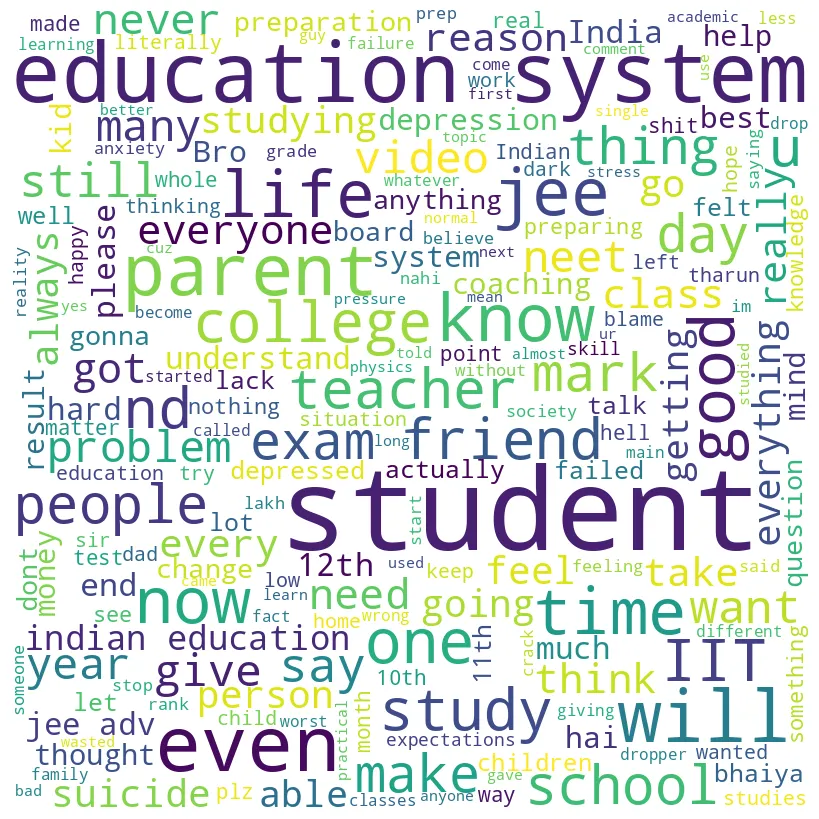
The word cloud portrays the highly pressurized, exam-focused nature of the Indian education system, where parental pressure, mental health struggles, and high-stakes competitive exams dominate conversations.
These insights show a collective dissatisfaction with the rigid structure of the Indian education system and a growing desire for a more balanced, student-friendly approach.
Findings
Insights and Recommendations
- Mental health crises fueled by academic pressure.
- An exam-focused, competitive culture that neglects holistic development.
- A commercialized education system where coaching plays a central role.
- A call for systemic change to reduce pressure and focus on skills and life preparation.
Key Statistics
Student Suicides in India — The Crisis
One student took their own life every 42 minutes in 2020, according to the National Crime Records Bureau (NCRB).
Source: DW News
Suicides of students below the age of 18 were reported across all of India in 2020.
Source: DW News
Students committed suicide in India between 2019 and 2021, with numbers increasing from 10,335 to 13,089.
Source: Times of India
People below 18 years died by suicide in 2021 due to “failure in examinations”, which is 1% of the total suicides in India.
Source: Economic Times
To prevent student suicides, Rajasthan police formed a special team of 11 officers to establish a student unit. Everyday, they receive at least 10 calls from distressed students with mental health issues.
Voices
Curated Views from Thought Leaders
Vidhi Jain
Critiques the Indian education system, sharing her journey of rejecting traditional schooling in favor of experiential learning and creativity through unschooling.
- The pressure of traditional schooling can lead to anxiety and stress in children, hindering their overall development.
- Learning through real-life experiences and interactions fosters genuine creativity in children.
- Workshops revealed that unschooled children displayed more creativity than their schooled peers.
- She sees similar issues in education systems worldwide, branding them as “factory schools”.
- Focus on passion and skills rather than degrees.
- Need for reform in global education systems to prioritize creativity and individual growth over standardized testing.
Bryan Shaw
Shares his journey from a troubled student to a successful entrepreneur, emphasizing the need for an education system that fosters creativity and passion.
- Focus on real-world skills.
- Adding creativity to learning.
- Without heavy reliance on exams, reducing stress and focusing on student interests can lead to high academic performance.
- Traditional education often fails to engage students' interests.
- Passion fuels engagement in learning.
Pragnya Suma
Advocates for a transformative change in education, emphasizing the need for practical application of knowledge and personalized learning.
- Education should focus on practical application, not just theoretical knowledge.
- Current education systems unfairly assess diverse talents with standardized tests.
- Real-life experiences are crucial for understanding concepts, like where food comes from.
- Passion-driven learning fosters creativity and personal growth in students.
- Soft skills and life skills are essential for navigating the real world successfully.
Indian Ed-Tech Industry
The Indian ed-tech industry has evolved rapidly post-COVID, presenting new opportunities for innovation.
- User behavior changed, with many educators becoming tech-savvy, ensuring a permanent shift to digital learning.
- Hybrid models are emerging as sustainable strategies, blending offline education with online tools.
- Customer acquisition costs soared during the race for market share, highlighting the need for sustainable growth strategies.
- Focus on user motivations and needs is essential for product-market fit and long-term success in the ed-tech space.
- Significant opportunities exist in upskilling and supplemental learning.